
I Thought I Saw Four Bikes
Sep 10, 2026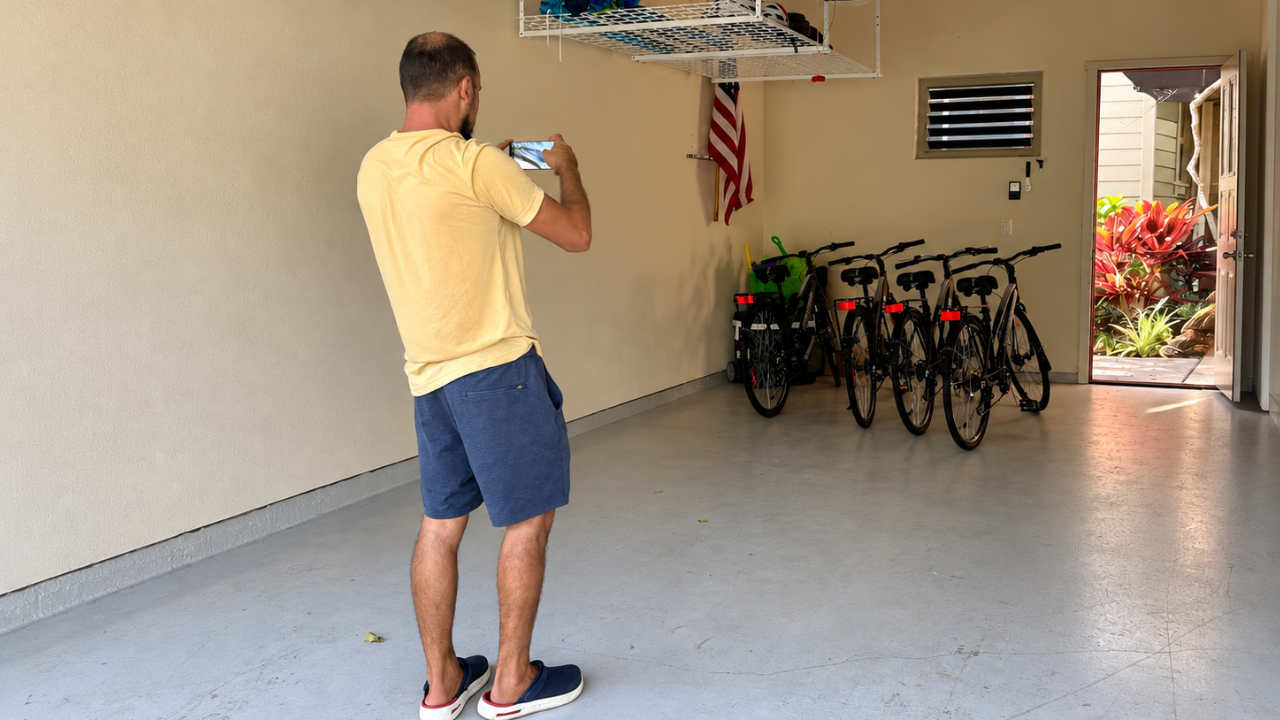
Written By Bart Berkey | Founder of Most People Don't
He WAS RIGHT, I WAS WRONG.
We pulled up to the Airbnb house we rented in Kona, Hawaii and noticed a man riding a bicycle down the middle of the street, swerving left and then right and then left again in slow wide arcs that had nothing to do with getting anywhere. Some of it looked like pure enjoyment, and the rest of it, as I would understand a few minutes later, was him leaning the bike over on purpose to find out whether it would hold.
A day before that, I had sent a short message to our host, because I had been going back through the details of the rental and was fairly certain I had seen four bikes in the garage on the website photo description, so I asked him where they were.
He wrote back within minutes to say that maybe they had been moved, and that he would find out right away.
Unfortunately, there had never been any bikes at that particular house and he double checked to make sure they were not moved or borrowed.
I had believed something that was not true.
I had been looking at tons of online rentals to consider before making my decision to rent that Airbnb and simply got confused.
That should have been the end of it, because he was right and I was wrong. He had been gracious about all of it, and the entire thing had cost us nothing more than a few messages.
Then he sent one more message that surprised me...
He Didn't Have to Do This.
"We are on the way, we're bringing four bikes to your location so your family can enjoy."
He did not send along the name of a rental shop in town, and he did not offer a small discount for the confusion. He went out and bought four new bicycles for a guest who had misread the correct listing.
The bikes were delivered to the house in boxes, he hired a handyman to assemble them, and when we finally turned into that driveway the handyman was still out in the street, swerving, making sure that a family he would never meet could ride safely.
Then we walked into the garage and found four bikes standing in a row against the wall, and set out on the shelf above them were four brand new helmets, which also surprised me, because we had not asked for bikes in the first place and we certainly had not asked for helmets. Somebody we had never met had sat down and thought about our safety.
One last thoughtful touch... screwed into the wall above the bikes were tool holders, mounted so that the bike tools would have a home and would not get lost. They had thought of everything, not only for us on this trip but for the next family that would need such a tool!
Recovery Is a Debt. This Was a Gift.
Almost every great service story people tell is really a recovery story, in which something broke and someone owned it and someone made it right. Recovery is honorable work, and it is also a debt being paid, because the company created the gap and the company is the one that closes it.
The homeowner had not caused any confusion. The listing was accurate, the mistake was mine, and he had already proven that in writing, kindly and completely.
He had every receipt he needed in order to be right, and being right would have cost him nothing at all, and he chose not to cash it.
I spent a good part of my career in hospitality, and nearly all of the training energy in that industry goes toward recovery, meaning what to do when the room is not ready and what to say when the order comes out wrong. Very little of it goes toward the situation. The homeowner was standing in, which is the one where you are completely in the clear and you decide to spend your own money anyway.
There is no policy written for that moment and no script to fall back on, so what fills the space is simply the kind of person who happens to be holding the phone.
The Gap You Did Not Create
If you're going to be handed one of these problem this week, it will not involve bicycles.
Someone on your team may remember the deadline differently than you do, or a client may be certain the contract included something it never included, or a new hire may arrive believing the role was one thing when you know perfectly well it was another.
You will have the email, along with the thread and the document and the notes and the timestamp, and being right will be sitting there for free, waiting for you to pick it up.
Most People pick it up, because it feels like clarity and it feels responsible and it settles the question, and it also ends the conversation, and it has never once made anybody feel cared for.
Buy the Bikes
That is the phrase our family has been using ever since Kona.
Buying the bikes has very little to do with spending money, and it does not mean pretending you were wrong when you were not.
It means treating the other person's expectation as real information rather than as an error to be corrected and filed away.
Somebody believed there would be bikes, and rather than argue with the belief, the homeowner asked himself what it would take to make it true.
That is a different question than the one most of us ask, and asking it consistently produces a different kind of life.
Three Things to Try This Week
- Say "Tell Me More." The next time someone is working off an expectation that does not match yours, hold your correction for sixty seconds and say those three words instead, because you will learn something about your own communication almost every time, and the person will keep talking rather than start defending. Notice that the homeowner never once told me I had misread anything. He simply said he would go find out.
- Buy the Helmets. Nobody asked homeowner for helmets, so look for the small unrequested thing that sits just past the obvious fix and do that one too, because it usually costs very little and it is almost always the part that people end up repeating to someone else.
- Screw in the Tool Holders. Do one thing this week for whoever comes after you, on a project or in a role you are handing off, knowing full well that they will never know it was you, because that is the cleanest test there is of who you are when nobody is grading the work.
Being Right Is Cheap
Being right is almost always available to us and almost always cheap, and that is exactly why it is worth so little.
What Will You Do With the Moment?
Somewhere this week, somebody is going to be wrong in a way that would cost you nothing at all to correct.
What have you been doing with that moment, and what would it take for you to buy the bikes instead?
Most people don't. But YOU do.
Bart
If your team knows what to do, but isn't consistently doing it, let's fix that.
📩 Email: [email protected]
📞 Direct: 301-312-1600
🌐 Website: mostpeopledont.com
🗓️ Availability: Schedule a call with Bart
For More Inspiration:
Listen to my podcast Most People Don't...but YOU Do!
For more than 5 years, I have been chasing one question: What do successful people do differently?
Find all my podcasts on Apple, Spotify, YouTube, and at mostpeopledont.com.
