
I Pressed Play Anyway: AI, Humanality & the Generosity Crisis
May 22, 2026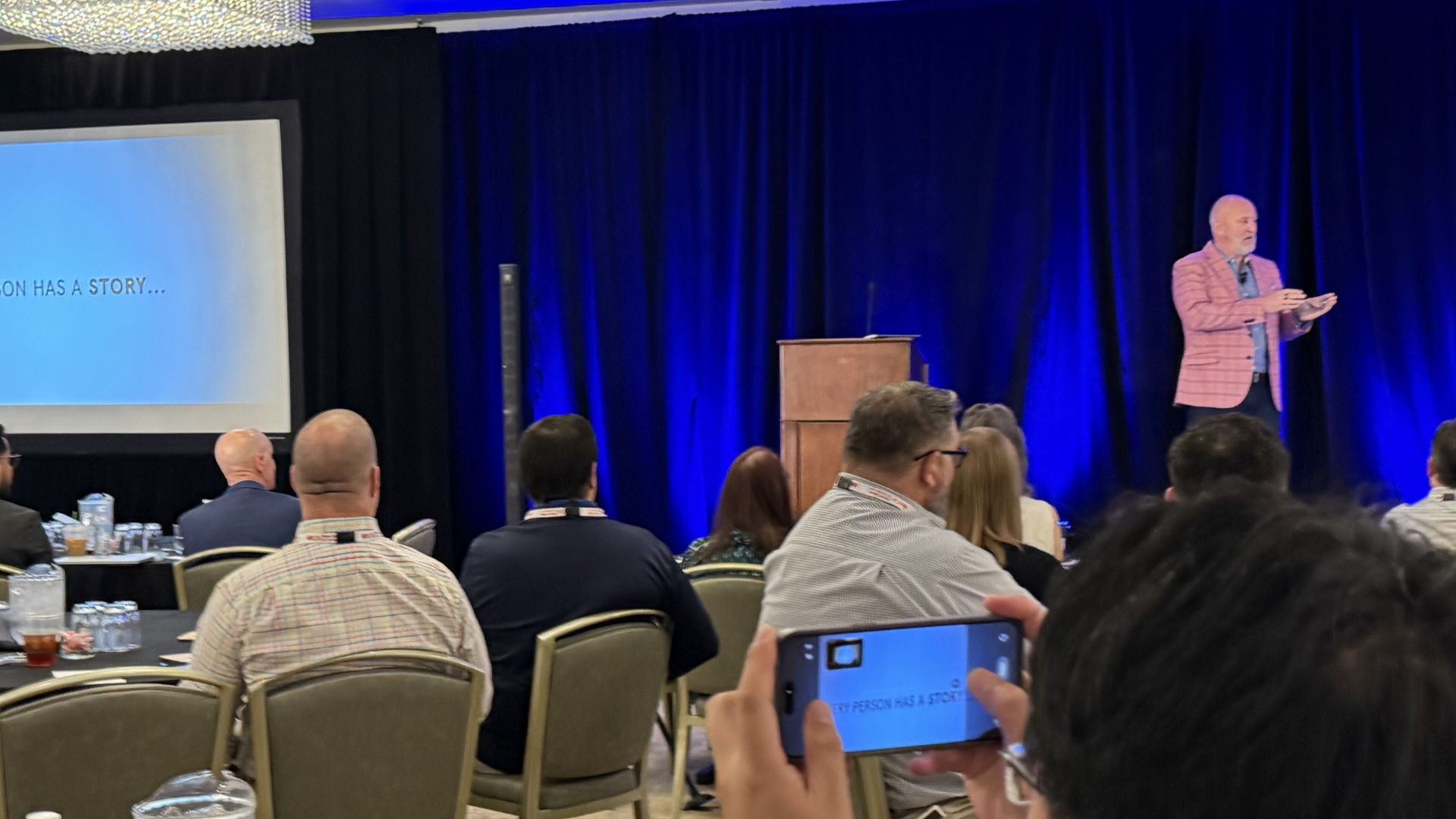
I pressed play anyway.
I had never seen the video I was about to show to 100 leaders.
However, I pressed play anyway.
This occurred on stage at the Blood Centers of America annual conference. The room had been talking about the things keeping them up at night, from cyber-attacks to how to deliver real service excellence to donors. Somewhere in the middle of it, I said something that had been building in me for a while.
The generosity crisis we are facing is not going to be solved by another ad about a shortage.
People are tired of being asked to give. What moves people is being made to feel like a life source, not a means. A true volunteer and giver, not a vein. Being seen. Being cared for, not processed.
I told the audience I wanted to prove what I meant. I said AI, used with heart, can enhance humanality instead of replacing it. I said I would show them, not tell them.
Then I walked off stage and started a 45-minute clock.
While the next speaker presented, I sat in a chair with my laptop. I pulled the transcript from the interview I had created the day before, where one of my guest's named Mike had introduced me to a mother's story. A baby born five months premature. Platelets that were not available when she needed them most. Family and strangers who came when she made the calls. Five months in the NICU. Then a goodbye.
I fed the transcript into AI tools to help me find the heart of her story. I shaped it into a script. Then I dropped the script into an avatar that looked like me, sounded like me, and could deliver the message I wanted to deliver.
45 minutes later, I walked back on stage. I told the audience I had never seen what I was about to show them, not once, and that I was watching it for the first time with them.
Then I pressed play.
The room got quiet.
What they saw was a version of me, sitting at a podcast mic, telling the story about a special mom.
When that mother tells her story now, people say, "That's so sad." She shakes her head. She says, "No. My baby was going to die in January. People came. They donated blood. And I got five months with my daughter that I never would have had."
Five months of holding her. Five months of being her mom.
I watched the room change while the video played. Leaders who run blood centers, who see this work every day, leaned forward in their seats. Some of them cried. I cried (thank goodness the avatar could speak when I could not).
Here is what I learned in those 45 minutes that I could not have learned any other way.
The generosity crisis is not going to be solved by another ad. It will be solved by people willing to find new ways to make someone feel cared for in the moment they need it most.
That is what HUMANALITY means. Making someone feel cared for, not processed. Whether the message arrives in a hospital, in a hallway, in a hand on a shoulder, or in 45 minutes of AI used with heart.
The technology was not the story. The mother was. The 45 minutes were just proof that we can find new ways to tell stories like hers.
Two ways to push back against the generosity crisis this week:
-
Give something you can't get back. That might be blood. Or it might be time someone wasn't expecting from you. Generosity matters most when it costs you something. Giving blood takes about 40 minutes, no appointment needed, and you walk out knowing you helped save a life. Or in that mother's case, you gave a family five months they never would have had.
-
Tell a story instead of making an argument. The next time you want to move someone, do not pile on facts. Find the one story that proves the thing you want them to feel, and tell it. People do not remember statistics. They remember mothers and they remember stories 22x more than data.
Somewhere right now, a stranger is counting on someone they will never meet.
So here is the question for you:
What is the story you have been meaning to tell, and what is stopping you from finding a new way to tell it?
Most People Don't...
But YOU do.
- Bart
